Coral Restoration Program in Roatan: Dive, Travel, and Protect the Reef
Coral Restoration in Roatan: Protecting Reefs Through Science, Education, and Action
Coral restoration plays a critical role in protecting the health and biodiversity of marine ecosystems, especially in destinations like Roatan where coral reefs are the foundation of both ocean life and sustainable tourism. Coral restoration aims to assist the recovery of coral species populations and restore reef health through a combination of sexual and asexual reproduction techniques. These efforts are increasingly important as coral reefs worldwide face severe threats from climate change, rising ocean temperatures, pollution, overfishing, and coastal development. Without active intervention, many reef systems would struggle to recover naturally from large-scale damage.
Healthy coral reefs support an extraordinary range of marine species, protect coastlines from erosion, and sustain local economies through fishing and tourism. As coral cover declines globally, innovative restoration strategies have emerged to rebuild reefs faster and more effectively. In Roatan, coral restoration initiatives led by Roatan Marine Park focus not only on restoring damaged reef areas but also on educating divers, visitors, and the local community about long-term reef conservation.
Innovative Coral Restoration Techniques Used in Roatan
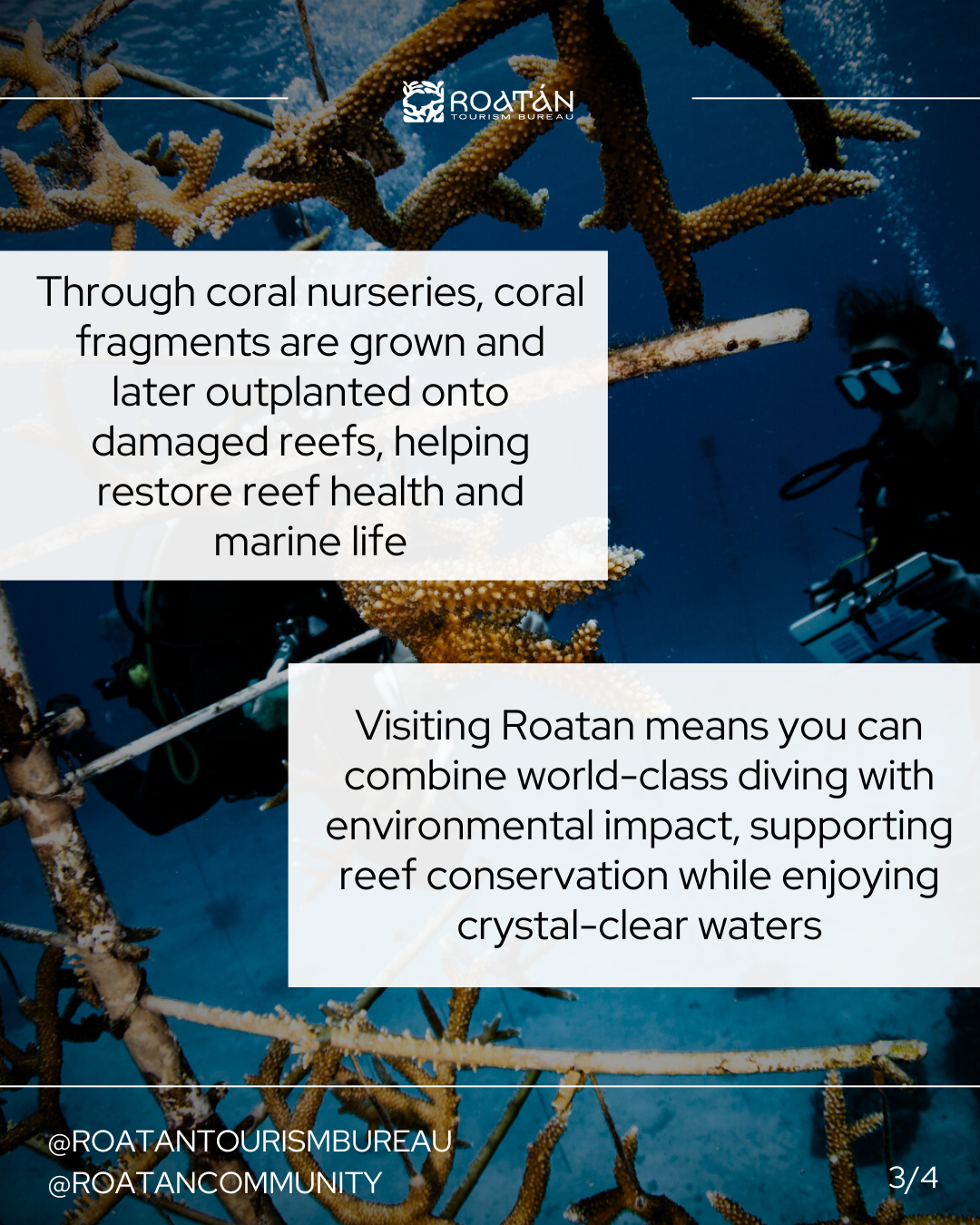
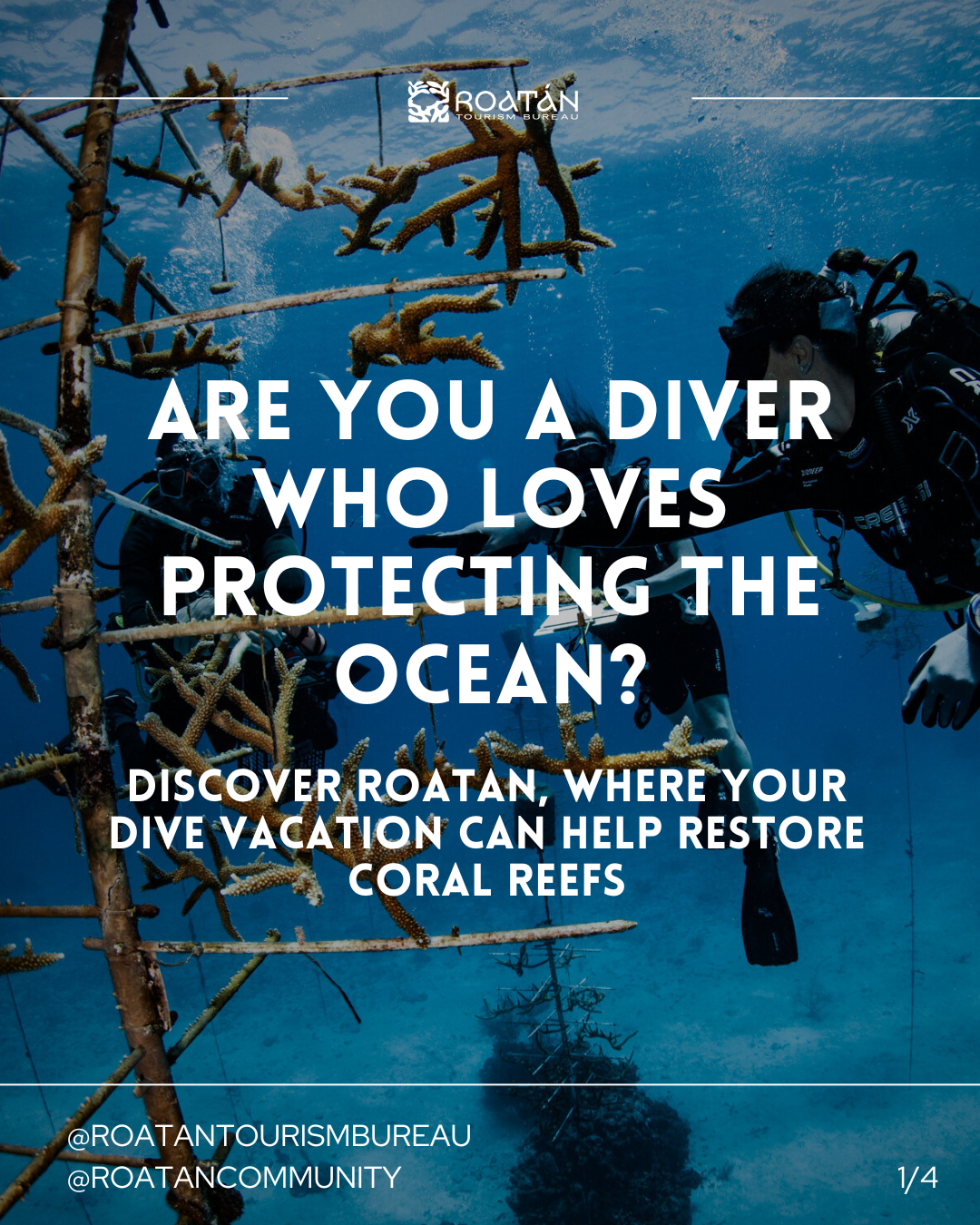
One of the most effective coral restoration methods used in Roatan is the establishment of coral nurseries. These nurseries function as underwater “gardens,” where coral fragments are grown in controlled conditions until they are large and resilient enough to be transplanted back onto degraded reef areas. Nursery-grown corals experience higher survival rates and help accelerate reef recovery in locations affected by storms, bleaching events, or human impact.
Fast-growing branching coral species are commonly propagated using asexual reproduction through fragmentation. When a healthy coral fragment breaks off, it has the natural ability to grow into a completely new colony. This characteristic makes branching corals ideal candidates for restoration projects, as they can rapidly increase coral cover and provide habitat for reef fish and invertebrates.
For slower-growing stony coral species, such as brain corals and boulder corals, a technique known as microfragmentation is used. This method involves cutting corals into very small pieces, which surprisingly stimulates faster growth when the fragments are placed close together. Over time, these microfragments fuse and form larger coral colonies. Microfragmentation has proven to be a powerful tool for restoring reef-building species that would otherwise take decades to recover naturally.
Coral Restoration Impact in 2024
Roatan Marine Park’s coral restoration efforts continue to show measurable impact. In 2024 alone, the program installed 45 coral nursery trees, providing critical space for coral growth and monitoring. That same year, 84 coral restoration courses were completed, expanding conservation knowledge among divers and ocean enthusiasts. The program also trained 7 certified coral restoration instructors, strengthening local capacity for long-term reef protection.
Most importantly, 310 coral fragments were successfully outplanted onto Roatan’s reefs in 2024, directly contributing to reef regeneration and increased coral cover. These results highlight how structured restoration programs, when combined with education and community involvement, can create tangible environmental benefits.
Coral Restoration Certification in Roatan
For those interested in actively participating in reef conservation, the RMP Coral Restoration Certification Course offers a hands-on opportunity to support coral restoration while gaining specialized knowledge. This certification program is designed for divers and ocean advocates who want to move beyond awareness and contribute directly to reef recovery.
The course is offered in two versions: Adventurer and Ambassador, allowing participants to choose their level of involvement based on experience and interest.
Adventurer Certification
The Adventurer course introduces participants to coral reef ecology, the major threats facing coral reefs, and the science behind coral restoration. Participants learn how coral nurseries function and gain practical experience cleaning and monitoring nursery structures. This course is ideal for divers who want to support reef conservation through monitoring and maintenance activities.
Ambassador Certification
The Ambassador course includes everything covered in the Adventurer certification, with the added opportunity to learn how to outplant coral fragments directly onto the reef. Participants gain hands-on experience placing nursery-grown corals onto restoration sites, making this certification ideal for those seeking a deeper, more active role in coral restoration efforts.
Where to Book the Coral Restoration Course
The RMP Coral Restoration Certification Course is currently offered through select dive centers in Roatan. Interested participants can contact participating dive centers directly to book their course and schedule their certification dives.
For additional information about coral restoration programs and certifications, inquiries can be directed to Roatan Marine Park at: coralrestoration@roatanmarinepark.org
Why Coral Restoration Matters for Roatan’s Future
Coral restoration is not just an environmental initiative—it is an investment in Roatan’s future. Healthy reefs ensure thriving marine ecosystems, resilient coastlines, and sustainable tourism opportunities for generations to come. By combining science, education, and community engagement, Roatan Marine Park’s coral restoration programs demonstrate how local action can make a global difference in reef conservation.
Through continued restoration efforts and hands-on certification programs, Roatan remains a leading example of how island communities can actively protect and restore one of the planet’s most valuable ecosystems.