Ctenosaura oedirhina: The Endemic Iguana That Makes Roatan Unique
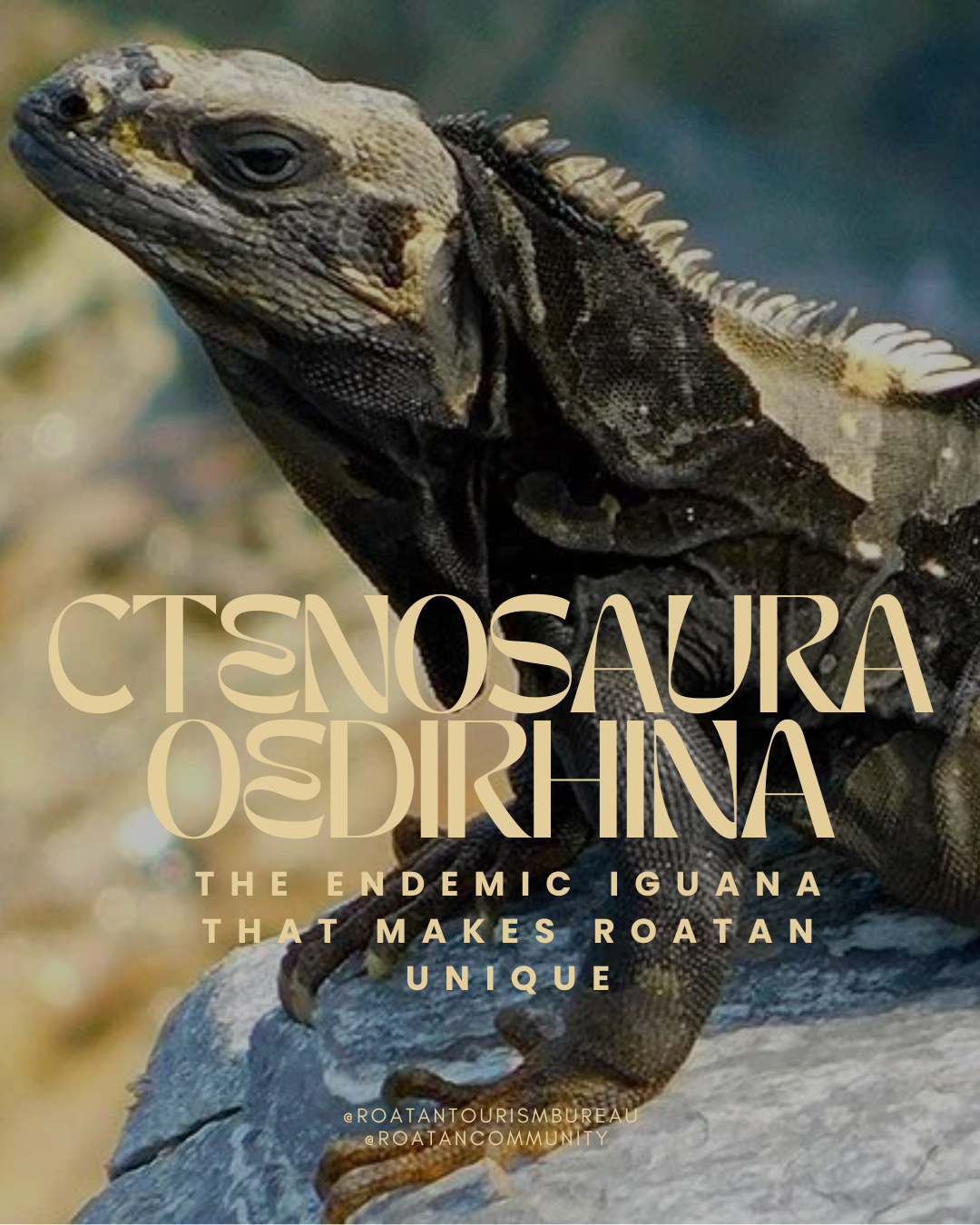
Roatan is widely known for its turquoise waters, coral reefs, and relaxed Caribbean lifestyle—but what truly sets the island apart is its extraordinary biodiversity. Among its most remarkable natural treasures is the Ctenosaura oedirhina, a species of iguana found nowhere else in the world. This endemic reptile is more than a fascinating animal; it is a living symbol of Roatan’s ecological value and a powerful reminder of why sustainable tourism matters.
An Endemic Species Found Only in Roatan
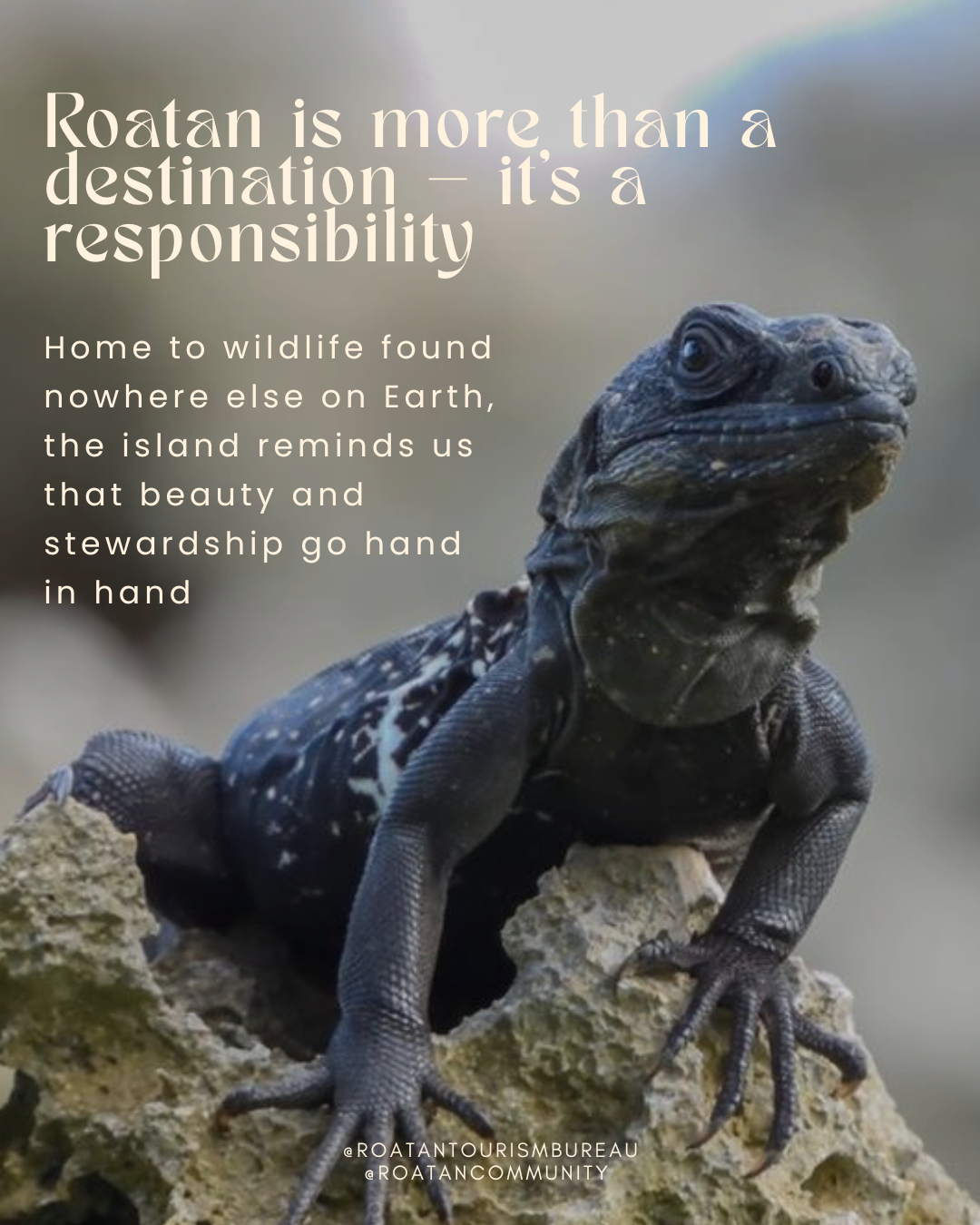
Ctenosaura oedirhina was formally described in 1987 by herpetologist Kevin de Queiroz and immediately recognized as a species of exceptional scientific importance due to its extremely limited geographic range. Endemic exclusively to the island of Roatan, this iguana evolved in isolation, adapting perfectly to the island’s dry forests, rocky coastal zones, mangroves, and semi-urban landscapes.
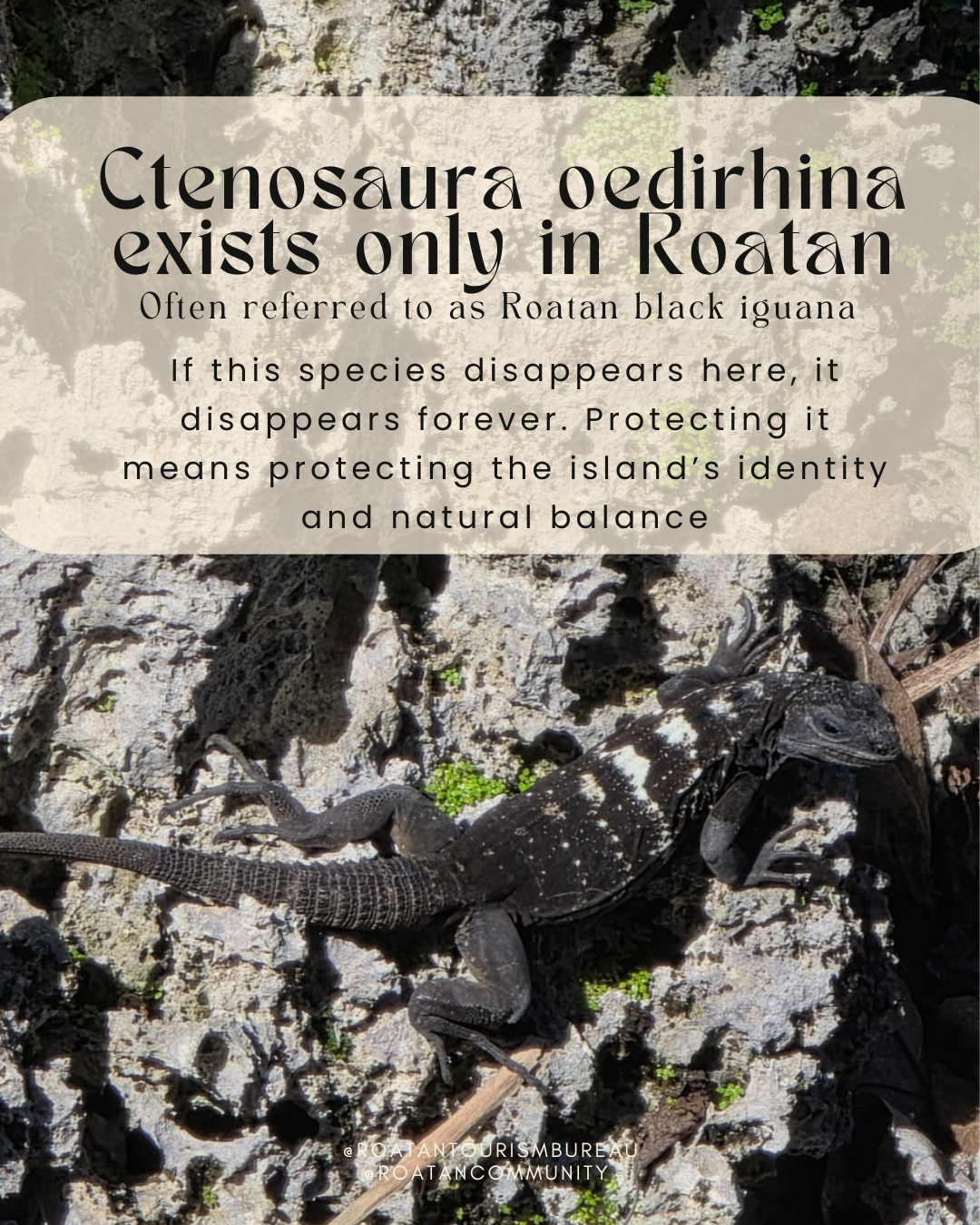
Its presence means that Roatan holds a global responsibility: if this species disappears from the island, it disappears from the planet. This fact alone elevates Roatan from a beautiful destination to a place of true environmental significance.
Physical Characteristics and Behavior
Often referred to as the Roatan spiny-tailed iguana or Roatan black iguana, Ctenosaura oedirhina is distinguished by its muscular body, strong limbs, and a tail lined with pronounced spines used for defense. Its coloration—ranging from dark gray to deep brown and black—allows it to blend seamlessly into rocky terrain and forested areas.
The species is diurnal and highly alert, often seen basking in the sun or perched on rocks and tree branches. Its diet is primarily herbivorous, consisting of leaves, flowers, and fruits, with occasional insects. This feeding behavior plays an important ecological role, particularly in seed dispersal and vegetation balance, helping maintain healthy ecosystems across the island.
Why This Iguana Matters for Sustainability
The survival of Ctenosaura oedirhina is closely tied to the health of Roatan’s natural environments. Habitat loss caused by uncontrolled development, deforestation, road expansion, and introduced predators poses ongoing threats to the species. For this reason, the iguana has become a key indicator species: protecting it means protecting entire ecosystems.
Sustainable land use, responsible construction, and conservation-focused planning directly benefit this iguana and, by extension, Roatan’s long-term environmental resilience. Conservation is not an obstacle to development—it is a foundation for it.
Sustainable Tourism and Wildlife Protection
For visitors, encountering the Roatan spiny-tailed iguana can be a memorable and meaningful experience. However, admiration must always be paired with responsibility. Ethical wildlife tourism means observing these animals without touching, feeding, or disturbing them, and supporting tour operators and accommodations that respect local conservation efforts.
Roatan’s growing focus on sustainable tourism aligns naturally with the protection of endemic species. Eco-conscious travelers increasingly seek destinations that value authenticity, biodiversity, and stewardship—and Roatan stands out as an island that still has something rare: wildlife that exists only here.
Roatan: An Island Defined by What It Protects
In a world where many destinations are becoming interchangeable, Roatan remains special precisely because of what cannot be replicated elsewhere. Ctenosaura oedirhina is a living reminder that the island is not just a place to visit, but a place to care for, respect, and preserve.
Protecting this iguana is about more than conservation—it is about honoring Roatan’s identity, supporting sustainable tourism, and ensuring that future generations can continue to admire one of the Caribbean’s most unique species in its natural home.
Roatan is special not only for its beauty, but for its responsibility. And the Roatan spiny-tailed iguana stands at the heart of that story.